For product teams
Bring product facts, supplier inputs, documents and approvals into one versioned workflow.
Collect product data, generate standards-ready Digital Product Passports, publish QR codes and GS1 Digital Links, and prepare products for the EU Digital Product Passport Registry — every claim backed by reviewable supplier evidence.
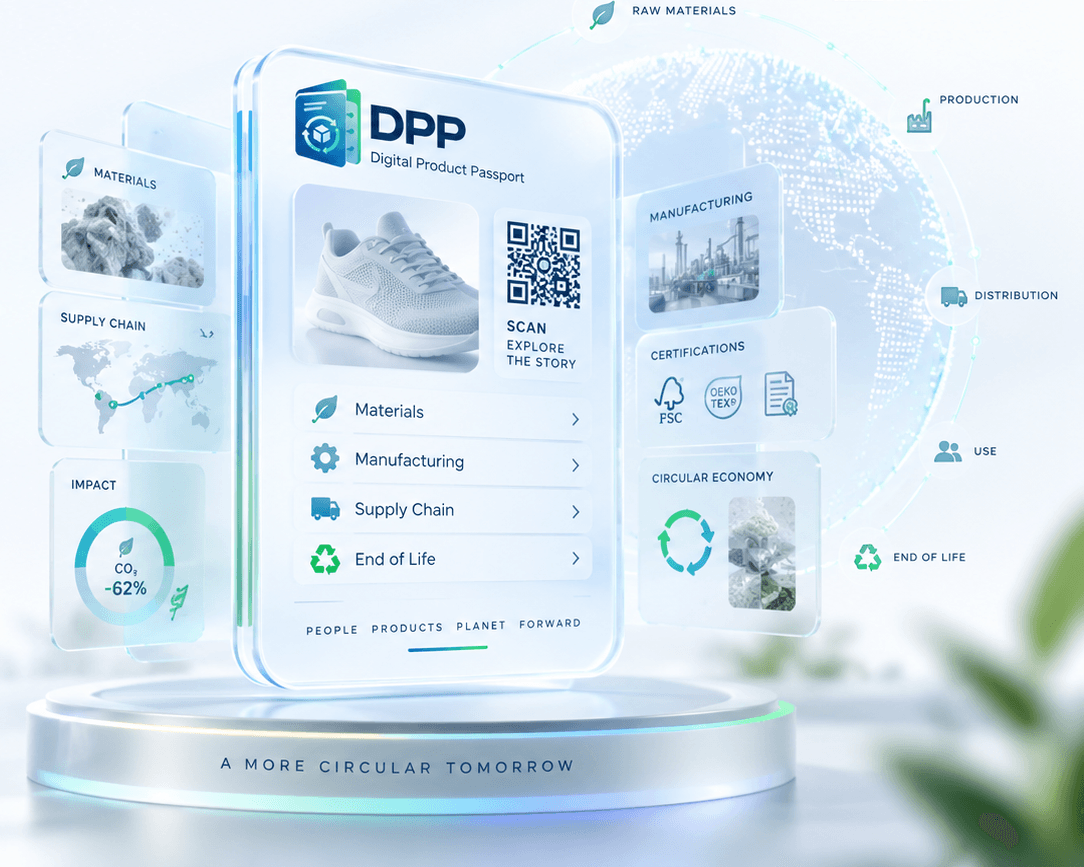
A digital product passport (DPP) is a structured, machine-readable record that connects a product’s identity, materials, evidence, lifecycle and compliance information to a persistent digital link. The exact data and access rules depend on the product category and applicable legislation.
Explore the platformBring product facts, supplier inputs, documents and approvals into one versioned workflow.
Share an understandable public view while keeping restricted evidence and sensitive fields controlled.
Keep sources, validation findings, publication decisions and earlier versions traceable.
 Open full-size example
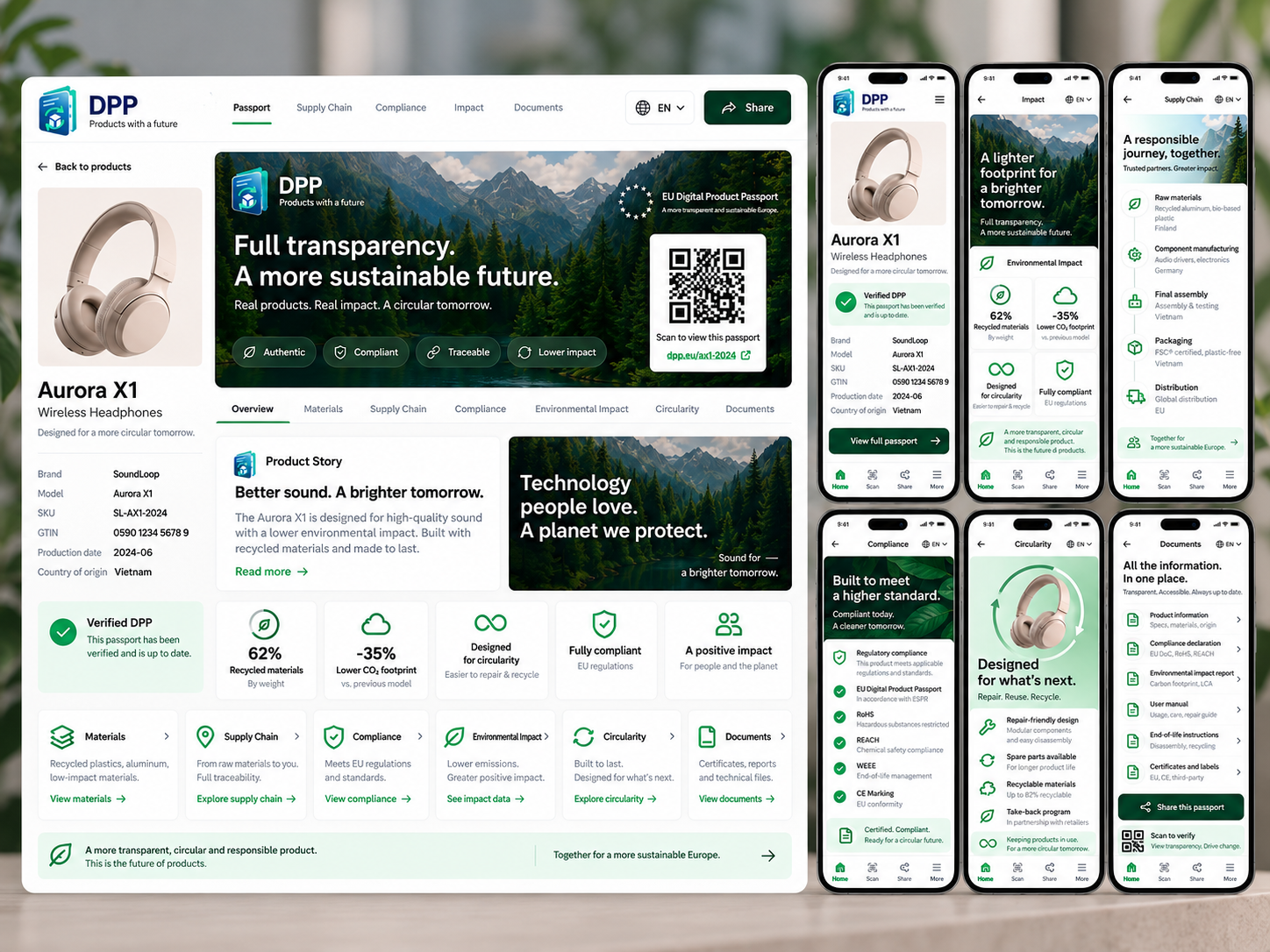
A public digital product passport brings the information people need into one accessible place. This example shows how a product page can connect clear facts with the records behind them.
Name, model, identifiers and origin make it clear which product the passport describes.
Explore what the product contains, where components come from and how it was made.
Find declarations, certificates and other supporting files alongside the claims they support.
See environmental information, repair guidance and end-of-life options in the same view.
A battery passport published on DPP Shield: identifiers, materials, substances of concern, carbon footprint, repair information, six evidence documents and a verifiable credential you can check.
Demonstration data for illustration, not a real product.Start with a guided schema and validation pack tailored to the product family, then extend it with the fields and rules your organization needs.
Chemistry, capacity, carbon footprint, recycled content, due diligence and lifecycle evidence.
Fibre composition, origin, care, durability, repair and end-of-life information.
Components, energy use, software support, repairability, substances and e-waste routes.
Materials, sourcing, durability, repair, disassembly and recycled-content data.
Performance, DoP and EPD data, materials, service life, reuse and deconstruction.
Composition, hazard classification, safety data, safe handling and regulatory screening.
Composition, intended use, declarations, migration information and traceability.
Material layers, recycled content, reuse, recyclability, labelling and end-of-life routes.
Vehicle and component identity, materials, traceability, repair, reuse and recovery.
Ingredients, responsible operator, safety information and product or batch traceability.
Device identifiers, manufacturer data, materials, evidence and lifecycle traceability.
Origin, inputs, production information, certifications and supply-chain traceability.
Label class, rolling resistance, wet grip, noise, EPREL registration and recycled rubber.
Grade, production route, recycled content, embodied carbon and mill-certificate traceability.
CE conformity, age grading, EN 71 safety, chemical compliance and notified-body data.
Energy class, EPREL registration, consumption, spare-parts availability and repairability.
Upper, lining and outsole materials, origin, recycled content and care information.
Category support means the platform provides a starter data schema and validation rules. It does not mean every product in that category already has a legal DPP obligation, or that the starter pack replaces legal review.
Move beyond product passports with managed GPSR Responsible Person, CE Authorised Representative and EORI services, plus practical tools for marketplace and customs workflows.
Order data entry for the number of products you need. Pay per product, and an assigned writer prepares your product details and passport data from the information you provide.
Choose your product quantity and see the total before payment.
An assigned rédacteur fills in your product facts and passport fields.
Your organisation owner or admin checks each entry, requests corrections if needed, and controls publication.
€3.00 per product · one-time service
Order data entryThe platform brings the everyday work of creating a passport into a single place. Category rule packs are starting points and should be reviewed against current requirements.
Capture product, material and lifecycle data with guided forms, custom fields and version history.
Bring in supplier declarations and documents, then review missing or inconsistent information before publishing.
Publish a redacted public view and connect it to QR and GS1 Digital Link carriers.
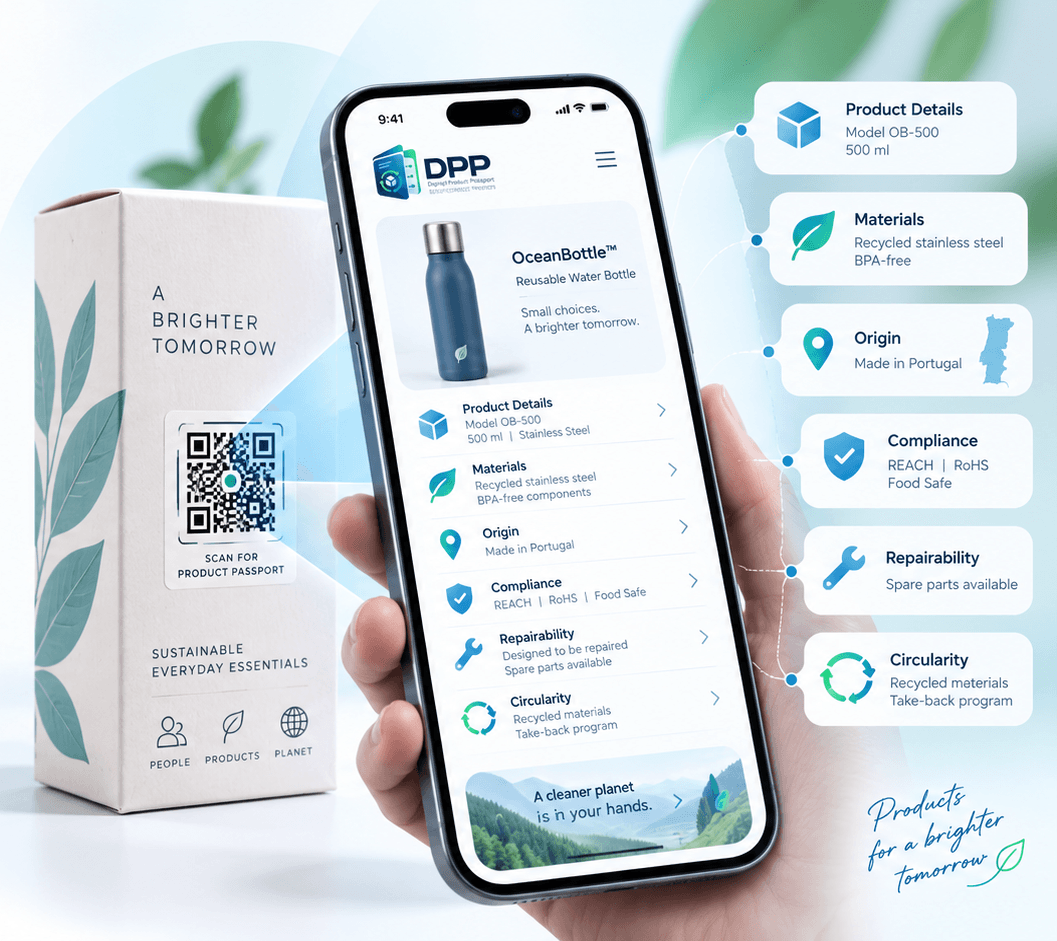
Connect the information behind your products. Make it easier for your team, partners and customers to explore what matters.
Create a product and choose the relevant category.
Add evidence and request missing supplier data.
Run validation and resolve findings with your team.
Approve a public version and share its link or carrier.
Short, direct answers to the questions teams ask before they structure, review and publish product data.
View all frequently asked questionsA digital product passport (DPP) is a structured digital record about one product, reachable from a data carrier such as a QR code. Under the EU Ecodesign for Sustainable Products Regulation, product-specific rules decide which products need one and what it must contain.
Only products covered by an EU act that requires one. Batteries are first: the Batteries Regulation requires a battery passport for light-means-of-transport, EV and industrial batteries above 2 kWh from 18 February 2027. Other groups follow as ESPR delegated acts are adopted.
DPP Shield offers plans with different limits for products, passports, documents, suppliers, workspaces and team seats. Current prices and included capabilities are shown on the pricing page; larger deployments can request a tailored quote.
Start by identifying the EU rules and product category that apply, then create a product record, collect the required supplier evidence, validate the data, review the public and restricted fields, and publish the approved passport behind its data carrier. DPP Shield supports that workflow but does not decide your legal obligations.
Yes. DPP Shield can generate QR and DataMatrix carriers using GS1 Digital Link paths for a GTIN and, where needed, a batch or serial number. Verify your GS1 identifier ownership and test the printed carrier before production.
Browse practical answers, walkthroughs and editorial guides written for product and compliance teams.
Explore the workspace and see how a passport moves from draft to a shareable public record.
Leave a message for our team
Tell us how we can help. Our team will reply here.